MRI Noise Reduction: Five Filters Compared
Objective
Remove noise without erasing anatomy
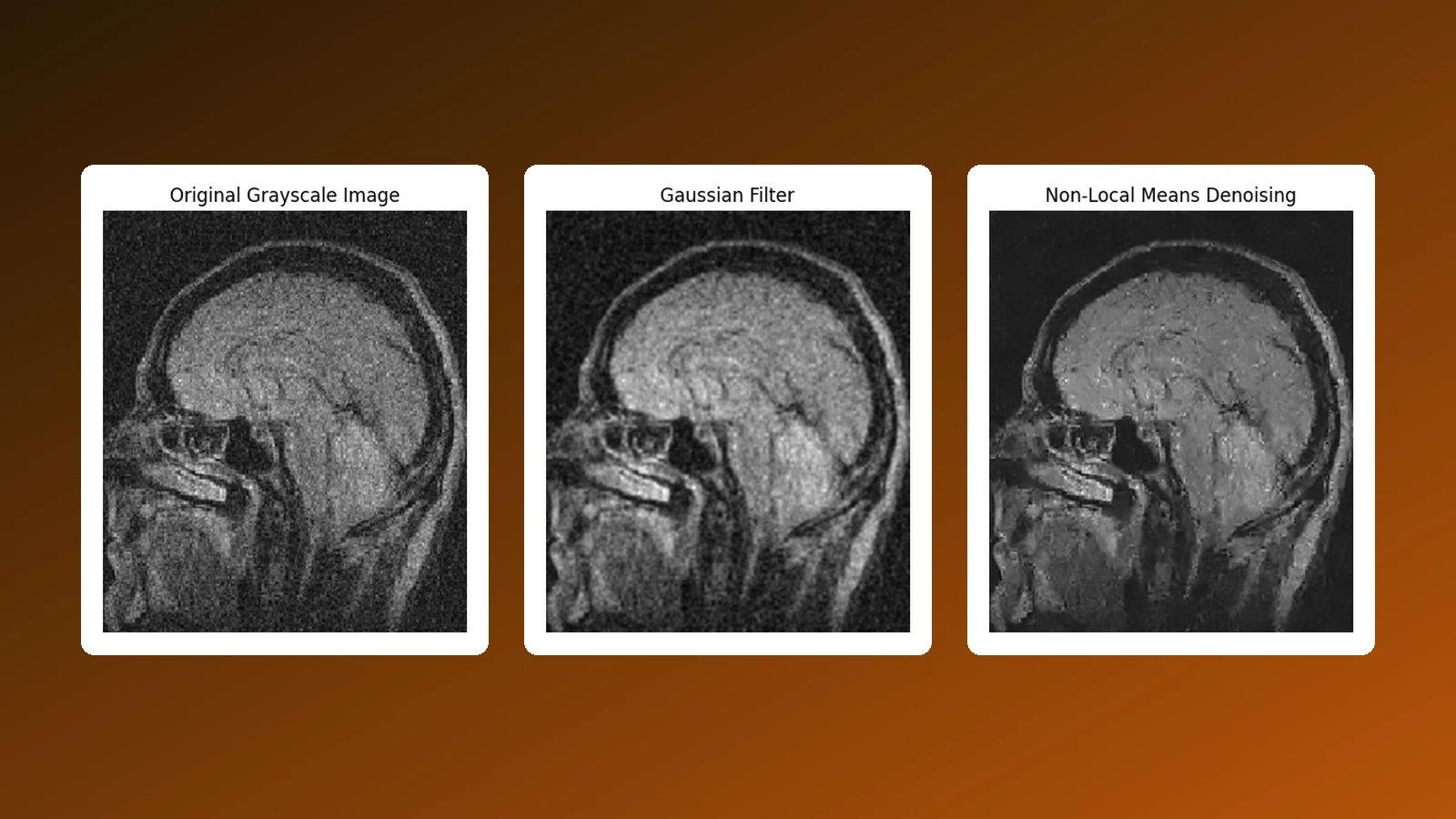
Noise in MRI hides fine anatomy, but aggressive smoothing destroys the very edges a radiologist reads. This experiment applies five denoising filters to the same noisy sagittal brain MRI and compares how each trades noise suppression against edge and texture preservation.
Tools & Data
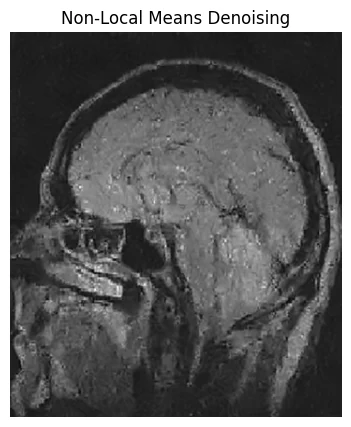
Original vs Non-Local Means
Filters Compared
Averages each neighbourhood. Very fast, reduces random noise, but blurs edges noticeably.
Gaussian-weighted smoothing. Handles Gaussian noise while keeping structure better than the mean filter.
Non-linear; replaces each pixel with the neighbourhood median. Excellent on salt-and-pepper noise and keeps edges.
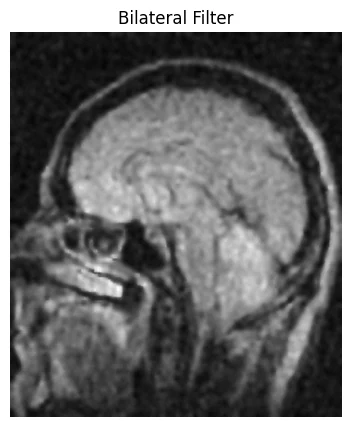
Weights neighbours by both distance and intensity difference, smoothing flat regions while preserving sharp boundaries.
Averages similar patches across the whole image. Best detail and texture preservation, at the highest compute cost.
Trade-off Summary
Mean filter
Very fast, poor edge preservation
Median filter
Good edges, fast
Bilateral & NLM
Excellent preservation, slower
Figures
Original · Mean · Gaussian · Median · Bilateral · Non-Local Means
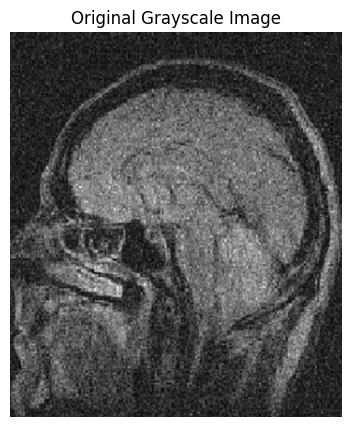
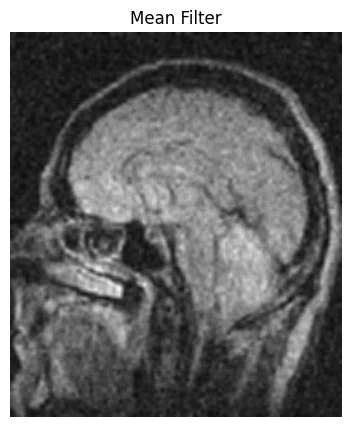
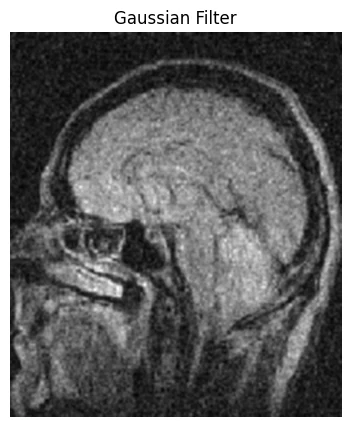
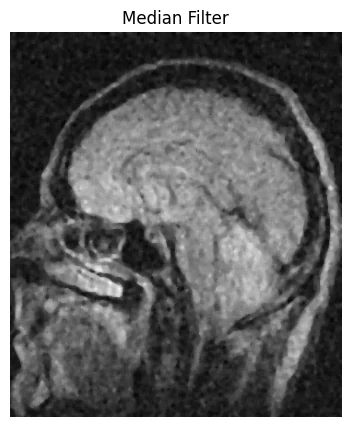
Why It Matters
Choosing the right filter is an engineering decision
There is no single best denoiser — the right choice depends on the noise model, the anatomy that must survive and the compute budget. These classical filters are also the benchmarks that learned denoisers are compared against.
Coursework for the Medical Imaging Laboratory (BME-3202), B.Sc. Biomedical Engineering, Islamic University.